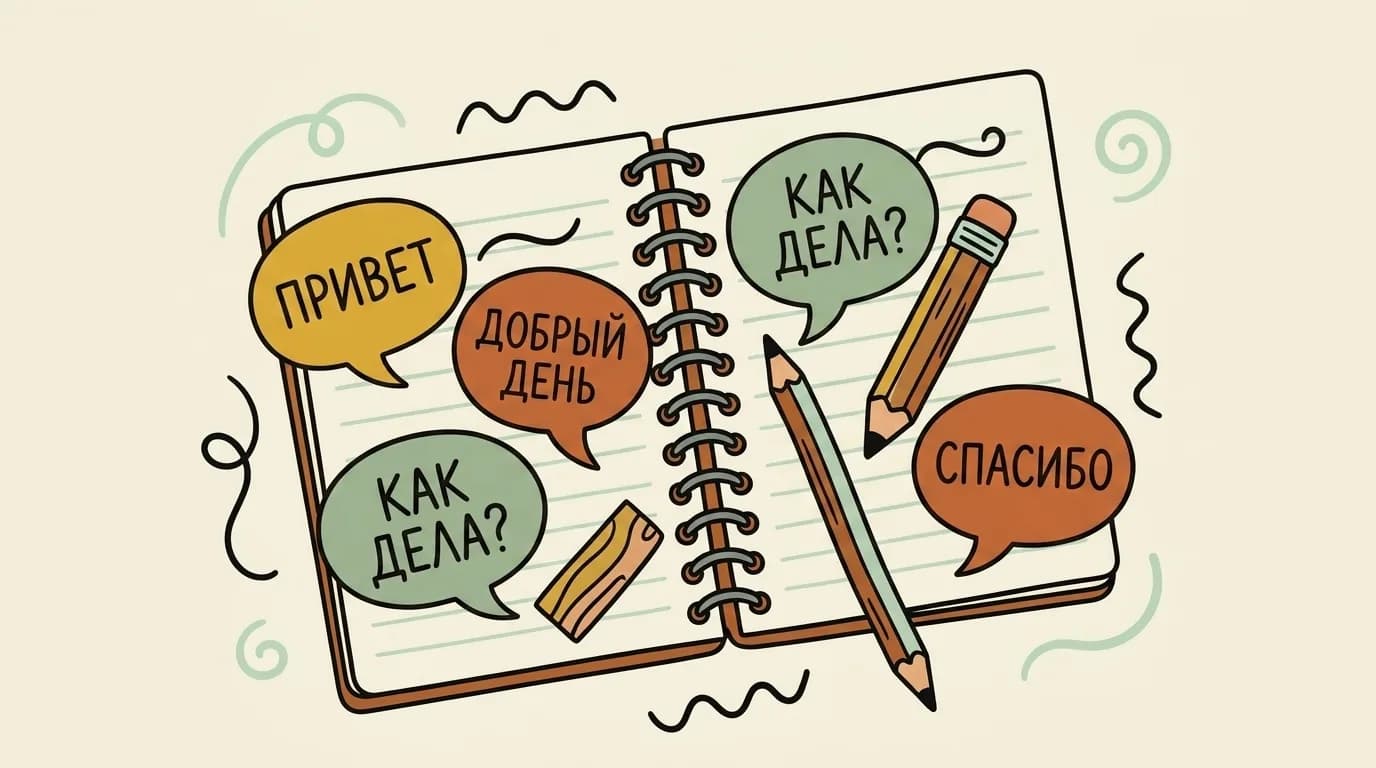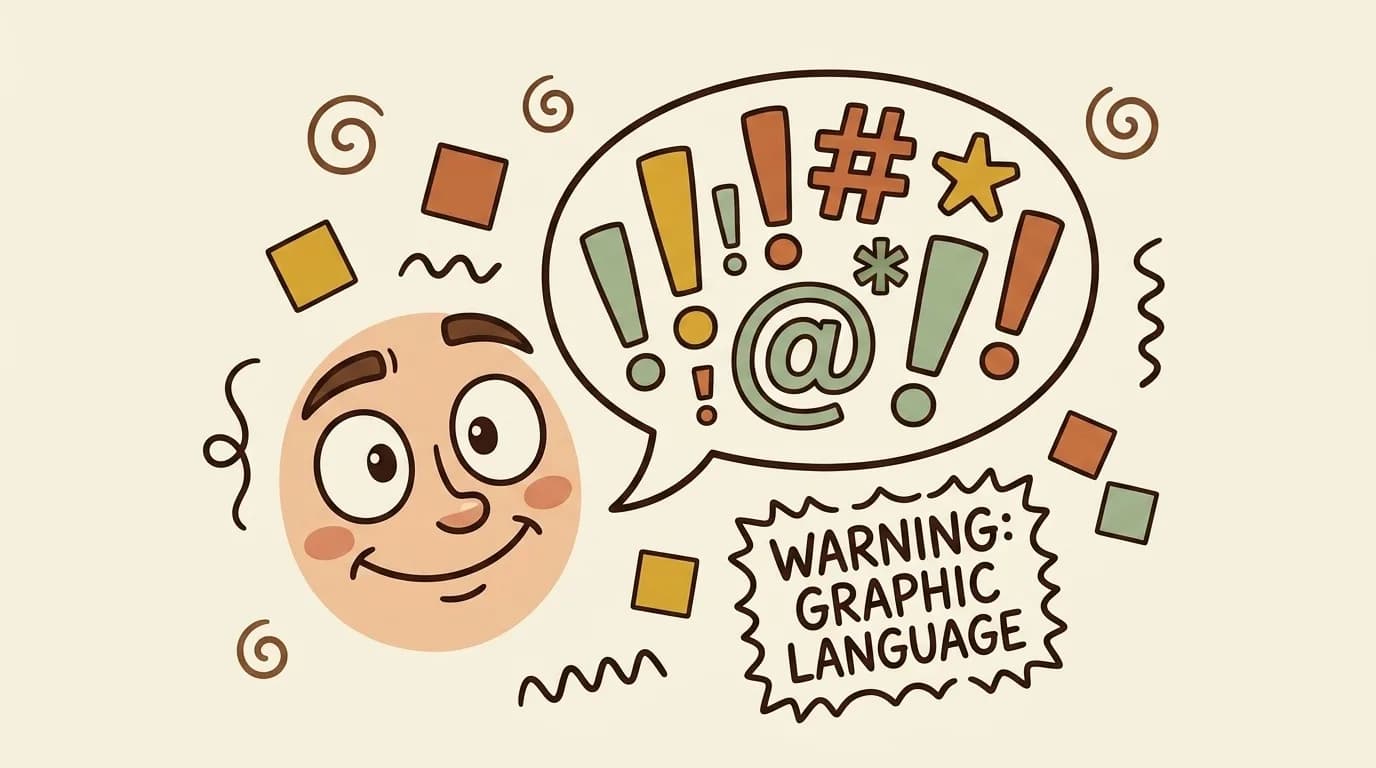
Let me start with a confession from the tutor's chair. Almost every student, sooner or later, asks me about Russian swear words. Sometimes it is shy, sometimes it is a giggle, but it always comes. And I understand the curiosity completely. You hear something sharp in a film, a song, or a heated argument on the metro, and you want to know what just happened. So this is my honest, grown-up answer. We are going to understand Russian curse words so that nothing catches you off guard, and then I am going to gently talk you out of using the strong ones. By the end you will know what to recognize, what to avoid, and which soft little words you can actually say out loud without anyone gasping.
What is мат, exactly?
The heart of Russian profanity has a name: мат (mat). This is not just a loose bag of bad words. It is a specific, almost closed system of taboo vocabulary, built on a small handful of root words, with its own grammar and an almost endless capacity to combine into longer expressions. Russians do not say "swearing" when they mean the heavy stuff. They say "ругаться матом", to curse using mat, as if it were a separate language layer that you switch into.
Here is the part that surprises English speakers. Mat is not the same as casual cursing. It sits closer to genuine taboo. There are words in mat that polite people will not say in front of children, parents, strangers, or in any public or professional setting, full stop. Not "edgy", not "for emphasis", simply off limits. I grew up hearing that these words could "dirty your mouth", and that framing tells you everything about how the culture treats them.
Tip: Treat mat as something to understand, not to deploy. A non-native speaker dropping a heavy Russian curse word almost never sounds tough or fluent. It sounds like a guest knocking over the host's vase. Recognition is the goal here, not performance.
Why Russian swearing hits harder than English
In English, swear words have lost a lot of their charge. They show up in casual chats, in advertising, in office banter. In Russian, the strong words have kept their teeth. There are a few reasons for that.
First, there is law and public norm. Russia has rules against public obscenity, and mat in media, film, and public spaces is restricted in ways that genuinely shape daily life. Films get the words bleeped. Books carry warnings. That legal weight reinforces a social instinct that is already strong.
Second, there is the social hierarchy of the words themselves. English roughly flattens "bad words" into one pile. Russian keeps clear tiers, and crossing from a mild exclamation into real mat is a visible, felt jump. Native speakers register it instantly. If you have explored how much culture lives inside everyday language in my piece on Russian idioms, this will feel familiar: the words carry far more social information than their dictionary meaning.
The roots everything is built on
I am not going to spell the strong words out, and I want to explain why rather than just be coy. The point of this article is comprehension and self-protection, not a vocabulary list to memorize. So here is the honest, censored picture.
Mat is famously built on a very small set of root words. Linguists usually point to a core of just a few: a crude root for the male anatomy, one for the female anatomy, one for the act itself, and a derogatory root for a woman of loose morals (the infamous "bl**t", which you will hear shortened and softened constantly, often as a mere filler). From these few roots, through prefixes, suffixes, and endings, Russian builds an astonishing number of verbs, nouns, adjectives, and exclamations. It is genuinely impressive as a piece of linguistic machinery and genuinely heavy in register. The strongest of these are the ones to recognize and never reach for.
The table below gives you the map without handing you a loaded gun.
| Word / type | Register | Rough meaning | When you'd hear it |
|---|---|---|---|
блин (blin, "pancake") | Mild | "darn", "shoot" | Dropped your keys, missed the bus. Totally safe. |
чёрт (chyort, "devil") | Mild | "damn", "dang" | Mild annoyance, a movie hero frustrated. |
ёлки-палки (yolki-palki, "fir trees and sticks") | Mild | "good grief", "for heaven's sake" | Folksy, almost grandmotherly surprise. |
чёрт возьми (chyort voz'mi, "devil take it") | Mild to medium | "damn it" | Stronger frustration, still printable. |
дурак / идиот (durak / idiot) | Medium insult | "fool" / "idiot" | An argument, a sibling spat. Rude, not obscene. |
| The bl**t filler | Medium to strong | crude filler, "damn" / harsher | Street speech, frustration. Recognize, do not use. |
| The core mat roots | Strong, taboo | obscene anatomy / acts | Real anger, very informal company. Avoid entirely. |
The safe words you can actually use
Now the good news, and honestly my favorite part. Russian gives you a whole shelf of soft exclamations that let you vent without crossing any line. These are the words I encourage students to keep.
The everyday champion is блин (blin). It literally means "pancake", and it works exactly like "darn" or "shoot". You stub your toe, you say "Блин!", and nobody blinks. Then there is чёрт (chyort, "devil"), which lands like "damn" but stays mild, and its slightly stronger cousin чёрт возьми (chyort voz'mi, "devil take it"). For a charming, slightly old-fashioned flavor, there is ёлки-палки (yolki-palki), literally "fir trees and sticks", which is about as threatening as your grandmother sighing. There is also ёлки зелёные (yolki zelyonye, "green fir trees"), same gentle energy.
For mild insults in a real argument, дурак (durak, "fool") and идиот (idiot) exist, and they are rude but not obscene. I mention them so you understand them when they fly past, not because I want you collecting them. If you are still building your everyday toolkit, these belong much later than the warm, useful lines in my guide to essential Russian phrases.
Tip: When in doubt, reach for
блин. It is the single safest pressure valve in spoken Russian, it makes you sound natural and human, and it will never embarrass you in front of a host family, a colleague, or someone's babushka.
So why learn any of this at all?
Because comprehension is protection. If a character in a film snarls something and the whole room goes quiet, you want to understand the temperature of the moment, not smile politely through it. If a song leans on a softened bl**t as filler, you want to recognize it for what it is. And if a Russian friend tests you with a "spicy" word to see your reaction, you want to respond with calm understanding rather than wide-eyed confusion. Knowing the map of Russian bad words, from the harmless блин up to the taboo roots you will never touch, makes you a more confident, less startle-prone listener. That is the entire goal: hear it, place it, move on.
If you want a patient native speaker to help you read the register of real Russian, the bleeped films, the heated arguments, the affectionate teasing, this is exactly the kind of cultural nuance we work through in my one-on-one lessons. Come learn the living language with someone who will tell you the truth about it and keep you out of trouble.
Try this today
- Practice saying
блинout loud the next time something small goes wrong, until it becomes your automatic, safe reflex instead of anything stronger. - Watch a Russian film scene with subtitles and notice where the audio gets bleeped. Ask yourself what register the moment is reaching for.
- Memorize the mild trio for recognition and use:
блин,чёрт,ёлки-палки. These are yours to keep. - Learn to recognize the softened bl**t as a filler word in songs and casual speech, so it never catches you off guard, and leave it firmly in the "recognize only" column.
- Make yourself one quiet rule: understand mat completely, deploy it never. Let comprehension, not imitation, be the win.