When I start with a new student, they almost always want the same thing first. Not grammar, not the cases, not a lecture on verbs of motion. They want the common Russian phrases that let them say something real to an actual human being. And honestly, that is exactly the right instinct. You learn a language faster when you can use it on day one.
So this is my master list of essential Russian phrases every beginner should carry around, grouped by situation. For each one I give you the Russian, a simple transliteration, and the meaning. A few of the big ones (hello, thank you, "I love you") have their own deep-dive guides, and I will point you to those along the way.
Let's get you talking.
Greetings: the first impression
You can open almost any interaction in Russia with one of these. The formality matters more than you might expect, so I have marked which is which.
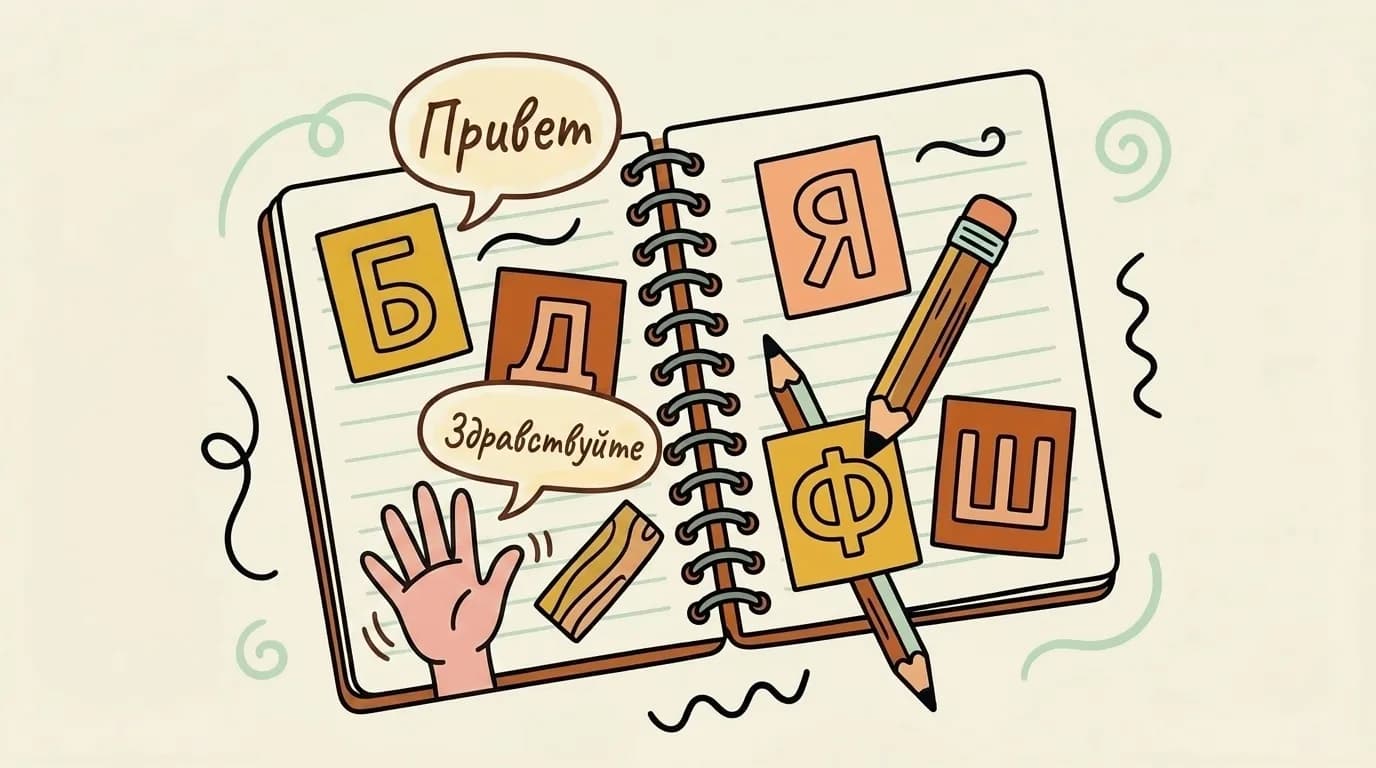
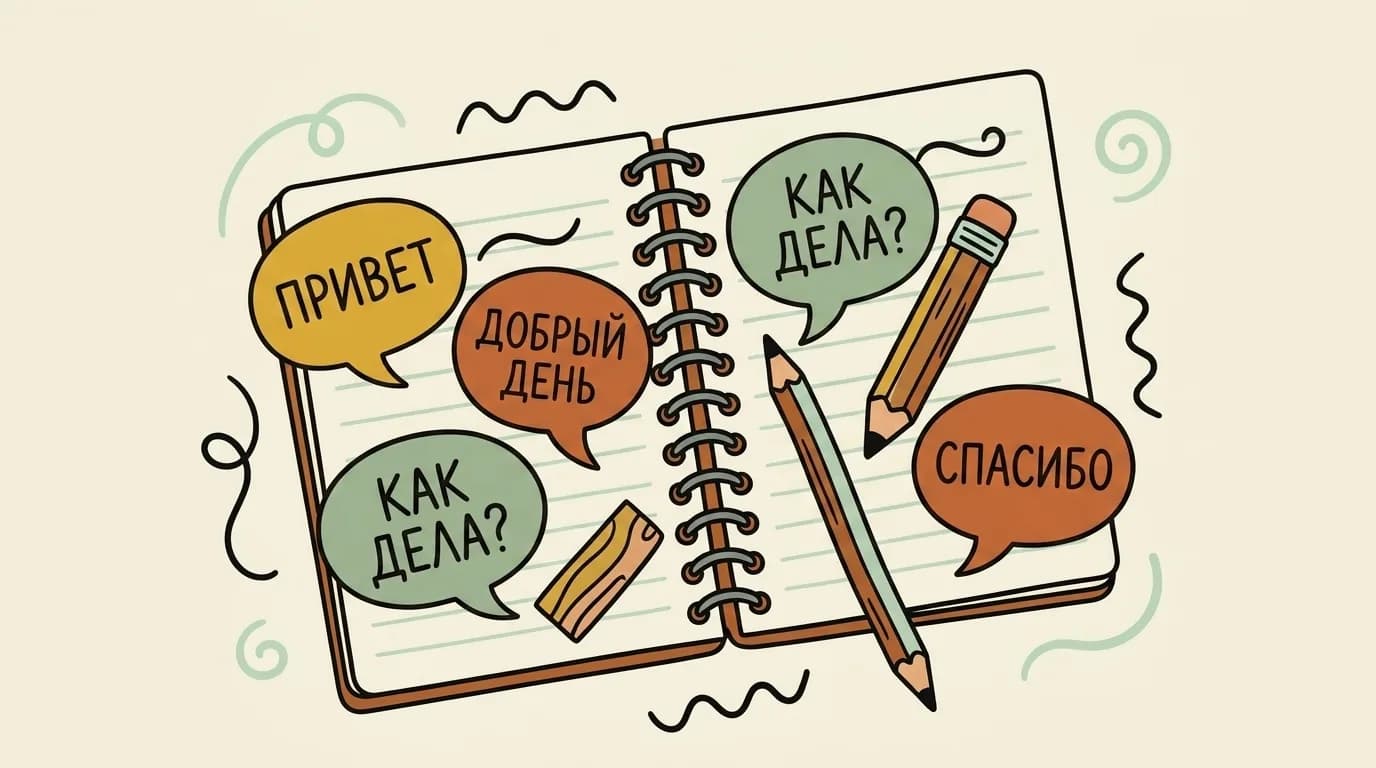
Привет(privet, "hi") for friends and people your age.Здравствуйте(zdravstvuyte, "hello," formal) for strangers, older people, and anyone you want to respect. Yes, it is a mouthful. Say it slowly.Доброе утро(dobroye utro, "good morning").Добрый день(dobry den', "good afternoon").Добрый вечер(dobry vecher, "good evening").Пока(poka, "bye," casual).До свидания(do svidaniya, "goodbye," formal, literally "until we meet again").
If you want the full breakdown of when to use which one and how to actually pronounce that monster Здравствуйте, I wrote a whole guide on how to say hello in Russian.
Tip: When in doubt, go formal. Russians rarely take offense at
Здравствуйте, but usingПриветwith a stranger can feel a little too familiar.
Politeness: please, thank you, sorry
These three little ideas will carry you through almost any short exchange. Russians appreciate them, and they soften everything.
| Russian | Transliteration | Meaning |
|---|---|---|
Пожалуйста | pozhaluysta | please / you're welcome |
Спасибо | spasibo | thank you |
Большое спасибо | bol'shoye spasibo | thank you very much |
Извините | izvinite | excuse me / sorry (formal) |
Прости | prosti | sorry (casual) |
Ничего | nichego | it's nothing / no problem |
Notice that Пожалуйста does double duty: it means both "please" and "you're welcome." Handy. And Извините is your magic word for getting someone's attention on the street or squeezing past on the metro.
Спасибо is one of those words you will say a hundred times a day, so it is worth getting right. I broke down the pronunciation and a few warmer variations in my guide to thank you in Russian.
Yes, no, and the very Russian "maybe"
Short answers you cannot live without.
Да(da, "yes").Нет(nyet, "no").Может быть(mozhet byt', "maybe").Конечно(konechno, "of course").Хорошо(khorosho, "okay / good / fine").Не знаю(ne znayu, "I don't know").
Хорошо is wonderfully flexible. It is your "sure," your "alright," your "sounds good." When someone proposes a plan, just say Хорошо and you sound like you belong.
When you're lost: "I don't understand"
You will not understand most of what people say to you for a while. That is normal. These basic Russian words buy you time and grace.
Я не понимаю(ya ne ponimayu, "I don't understand").Повторите, пожалуйста(povtorite, pozhaluysta, "please repeat that").Медленнее, пожалуйста(medlennee, pozhaluysta, "slower, please").Вы говорите по-английски?(vy govorite po-angliyski?, "do you speak English?").Я не говорю по-русски(ya ne govoryu po-russki, "I don't speak Russian").Как это по-русски?(kak eto po-russki?, "how do you say this in Russian?").
That last one is my favorite, because it turns any stranger into a teacher for a few seconds.
Tip: Pair
ИзвинитеwithВы говорите по-английски?and you have a complete, polite opener for asking a stranger for help. "Excuse me, do you speak English?" goes a long way.
Introducing yourself
Once the greeting lands, you will want to say who you are. Keep it simple.
Меня зовут...(menya zovut..., "my name is...," literally "they call me...").Как вас зовут?(kak vas zovut?, "what is your name?," formal).Очень приятно(ochen' priyatno, "nice to meet you").Я из Америки(ya iz Ameriki, "I am from America").Я изучаю русский(ya izuchayu russky, "I am learning Russian").Как дела?(kak dela?, "how are you?").Всё хорошо(vsyo khorosho, "everything is fine").
Tell people Я изучаю русский early and watch them light up. Locals are genuinely delighted that you are trying, and they will slow down to help you.
Numbers and ordering basics
You do not need to count to a thousand yet. You need enough to order a coffee, pay, and not panic.
| Russian | Transliteration | Meaning |
|---|---|---|
один | odin | one |
два | dva | two |
три | tri | three |
четыре | chetyre | four |
пять | pyat' | five |
сколько стоит? | skol'ko stoit? | how much is it? |
счёт, пожалуйста | schyot, pozhaluysta | the check, please |
To order, the easy formula is the thing plus пожалуйста. For example, Кофе, пожалуйста (kofe, pozhaluysta, "coffee, please") or Воду, пожалуйста (vodu, pozhaluysta, "water, please"). Point at the menu, add пожалуйста, and you are golden. Grammar can wait.
Survival travel lines
A handful of phrases for the moments that actually come up when you travel.
Где туалет?(gde tualet?, "where is the bathroom?"). Possibly the single most useful sentence here.Помогите, пожалуйста(pomogite, pozhaluysta, "help, please").Я заблудился(ya zabludilsya, "I'm lost," male speaker) orЯ заблудилась(ya zabludilas', female speaker).Где метро?(gde metro?, "where is the metro?").Сколько времени?(skol'ko vremeni?, "what time is it?").Можно?(mozhno?, "may I? / is it allowed?").
Можно? deserves a special shout-out. It is a tiny word that asks permission for almost anything. Point at a seat and say Можно? to ask if you can sit. Point at your camera and say Можно? to ask if photos are allowed. One word, endless uses.
And once your heart is in it, there is Я тебя люблю (ya tebya lyublyu, "I love you"). That one has its own story and a few tender variations, which I covered in I love you in Russian.
A gentle note before your homework
You will mangle these phrases. You will mix up Спасибо and Пожалуйста. You will say Здравствуйте and have it come out as a sneeze. That is completely fine. The goal right now is not perfection, it is contact. Use the words, make the mistakes, and let real people correct you.
If you would like a friendly human in your corner while you find your footing, that is exactly what I do in my 1-on-1 online lessons. We can practice these exact phrases out loud until they feel natural, at whatever pace suits you. No pressure, just conversation.
Try this today
- Pick three greetings from the list and say each one out loud five times until your mouth stops fighting you.
- Memorize
СпасибоandПожалуйста, then use them with a barista, a cashier, or anyone who hands you something today (even in your head). - Practice your full introduction:
Здравствуйте, меня зовут...followed byЯ изучаю русский. - Learn the numbers
одинthroughпятьby counting objects around your room. - Drill the rescue line
Извините, вы говорите по-английски?so it is ready the moment you need it.
Rescue a conversation: a short role-play
You do not need to understand the first reply to keep talking. Choose the request that solves the actual problem.
Извините, я не понимаю. Повторите, пожалуйста. Можно помедленнее? Напишите, пожалуйста. Спасибо, теперь понятно.
Excuse me, I do not understand. Please repeat. Could you speak more slowly? Please write it down. Thank you, now it is clear.
Practise one request at a time. Repeat asks for another attempt; помедленнее asks for a slower pace; напишите asks for writing.
AI-generated practice audio; not a recording of Alex.
You did not hear the last sentence. What do you ask?
Повторите, пожалуйста (“Please repeat”). Try saying it immediately after a practice partner reads any short sentence. You are asking for repetition, not pretending you understood.
The person repeats, but speaks too quickly.
Можно помедленнее? (“Could you speak more slowly?”). Add пожалуйста if you wish. Practise linking this request to Извините, я не понимаю.
You need to keep an unfamiliar street name or address.
Напишите, пожалуйста (“Please write it down”). Point to the relevant place to write. For a number, reading it back lets the other person correct you before you leave.
Now run a 30-second role-play: greet someone, ask for information, use one repair phrase and finish with Спасибо, теперь понятно. Swap roles. Do the second round with the transcript covered and choose a different repair phrase.