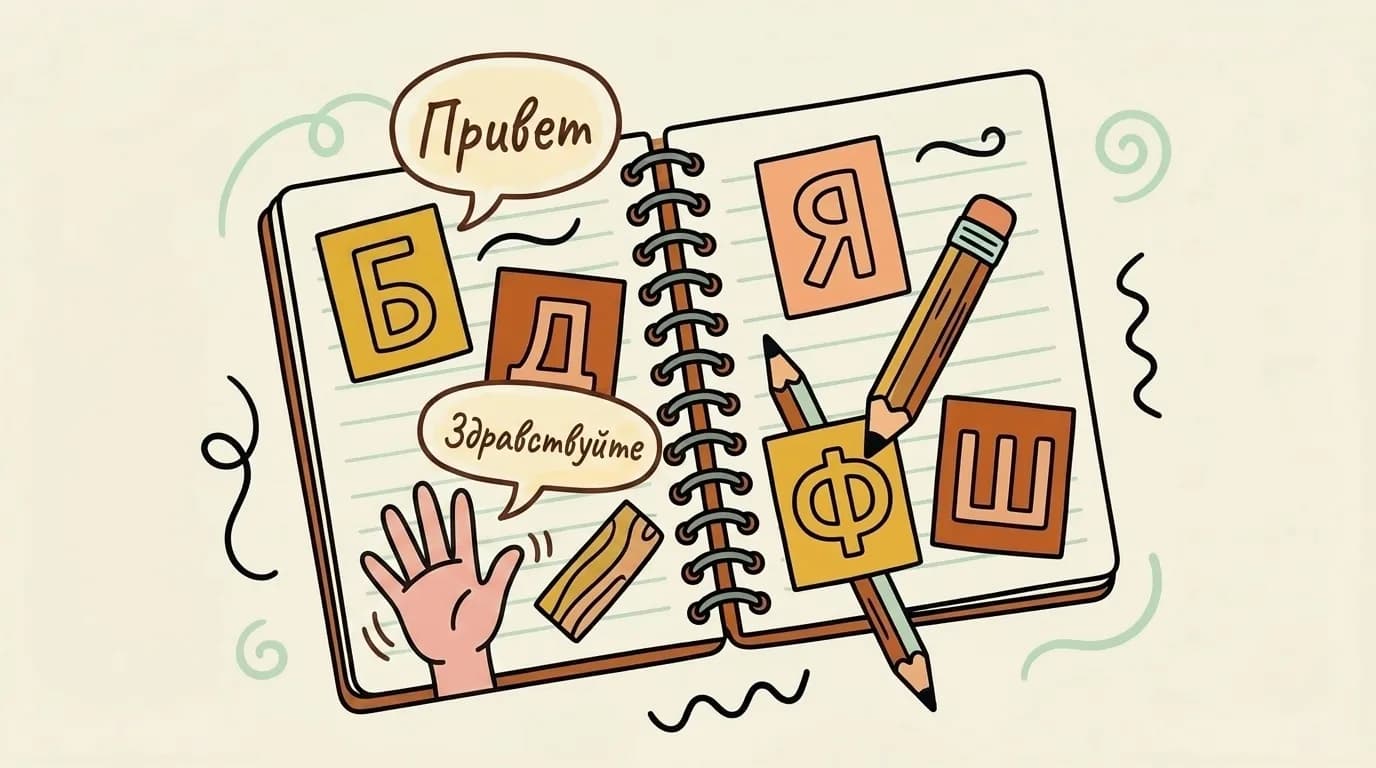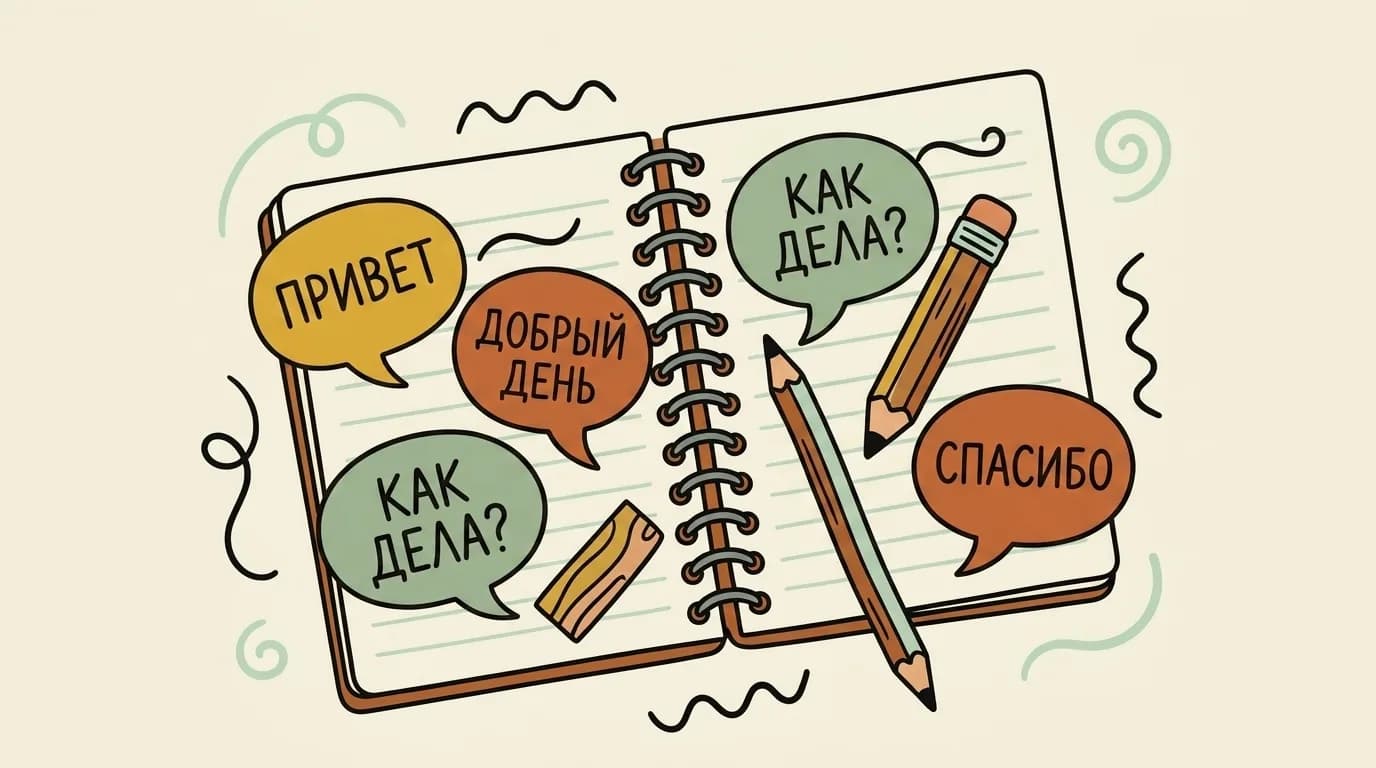
Greetings are the very first thing you use in any language, and in Russian they are also the fastest way to sound warm instead of robotic. The good news: you only need a small handful of common Russian greetings to handle almost every situation, from meeting your friend's grandmother to picking up the phone. The single idea that drives all of them is the split between formal and informal, and once that clicks, every other greeting falls into place. Let me walk you through the ones my students actually use, with pronunciation and the moment each one fits.
Formal vs informal: the one rule that drives every greeting
Russian sorts the world into formal and informal, and your greeting announces which one you mean before you say anything else. The formal hello is Здравствуйте (zdravstvuyte, "hello", formal). You use it with strangers, elders, your boss, shop clerks, and officials. It looks like a typo and sounds like a tongue twister, but here is the trick: drop the first в and say "ZDRAST-vooy-tye." A confident, slightly imperfect version beats a perfect silent one every time.
The casual hello is Привет (privet, "hi", casual), pronounced "pree-VYET" with the stress on the second syllable. This is your everyday word for friends, classmates, kids, and peers. The firm rule: never open with Привет to someone clearly older or in authority unless they used it with you first. When in doubt, go formal, then relax later once they signal it is fine. If you want the focused deep dive on just this word, I wrote a whole guide on how to say hello in Russian that drills the pronunciation and the edge cases. This article is the broad overview; that one is the close-up on hello.
Tip: If you genuinely cannot tell whether to be formal or casual, default to formal. Russians read that as respect, never as coldness, and you can always warm up the next time you meet.
Time-of-day greetings
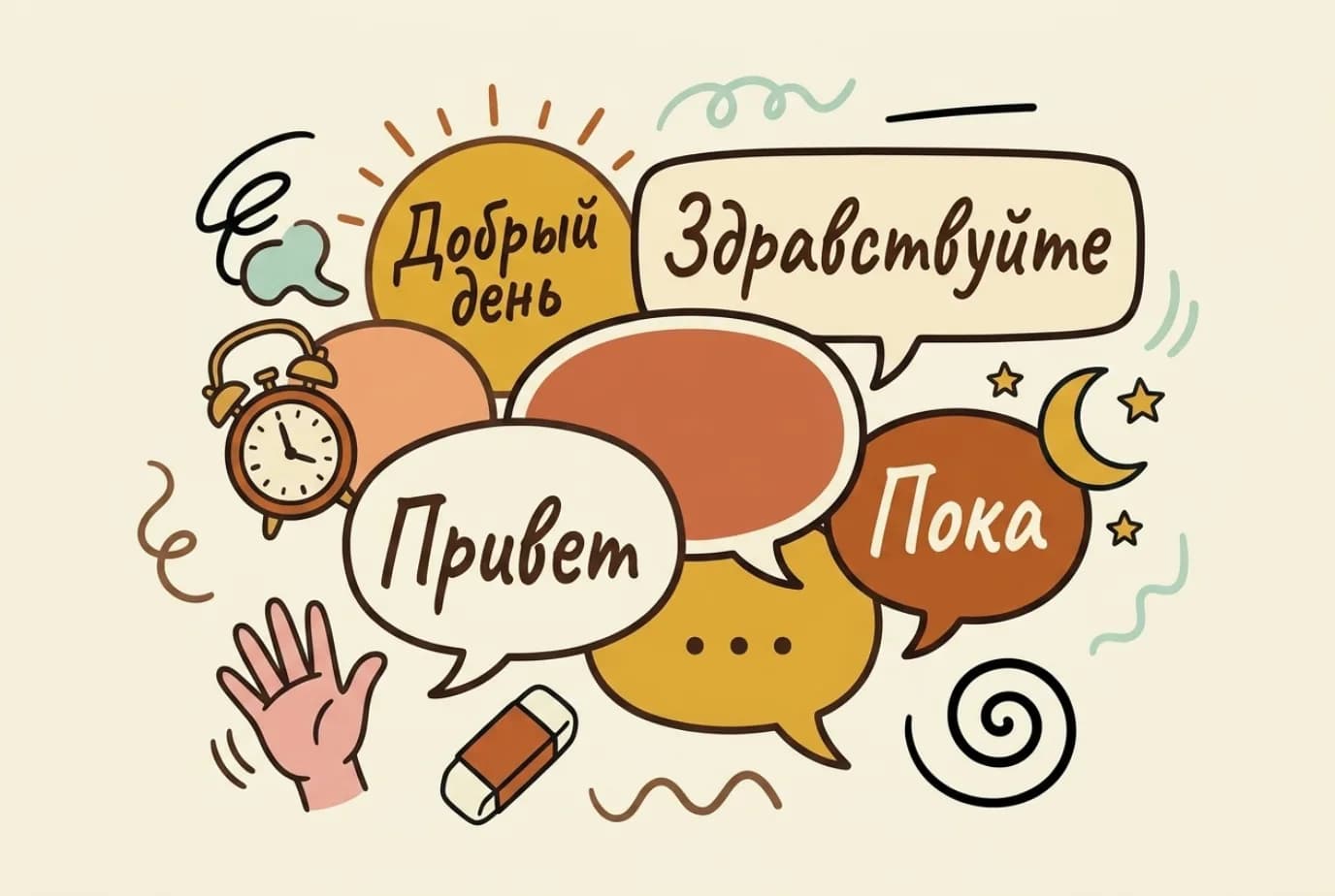
Look at the doodle at the top of this post: a clock, a sun, a moon. That is exactly how Russian time-of-day greetings work, and they are some of the easiest to learn because they follow a clean pattern of "good" plus the part of the day. Best of all, they sit comfortably in both formal and informal settings, so they are wonderfully safe.
In the morning you say Доброе утро (dobroye utro, "good morning"), roughly until late morning. For the rest of the daytime you switch to Добрый день (dobry den, "good day"), which is honestly my favorite all-purpose greeting. It is polite, natural, and fits almost any situation from noon to early evening, so when you are unsure about formality, Добрый день (dobry den) is your escape hatch. When evening arrives you say Добрый вечер (dobry vecher, "good evening"). And at night, as you part ways or send someone off to bed, you say Спокойной ночи (spokoynoy nochi, "good night"). Notice that good night is a farewell, not an opener. You do not walk up to someone and lead with it.
"How are you?" and how to answer
Once you have said hello, the natural next step is asking how someone is doing. Formally you say Как у вас дела? (kak u vas dela, "how are you?"), and casually you shorten it to Как дела? (kak dela, "how are you?"). The standard friendly reply is Хорошо, спасибо (khorosho, spasibo, "good, thanks").
Here is a cultural heads-up that trips up a lot of English speakers. In the United States, "how are you?" is basically a second hello, and the only expected answer is "good, you?" Russians take the question more literally. If you ask, you may get a real answer, including a genuinely so-so one, because the question is treated as sincere rather than as a reflex. So ask it when you actually mean it, and do not be surprised by an honest reply. That small difference is one of the first things we untangle when practicing Russian small talk.
Saying yes, no, and thank you politely
Greetings quickly turn into tiny exchanges, and these short words carry most of the politeness. Yes is Да (da, "yes"), no is Нет (net, "no"), and thank you is Спасибо (spasibo, "thank you"). Simple, but they do enormous work.
The combo worth memorizing as a single unit is Да, спасибо (da, spasibo, "yes, thank you"). You use it constantly when accepting an offer: someone asks if you would like tea, a seat, or help with your bag, and you answer Да, спасибо (da, spasibo). It sounds gracious and a little warm, exactly the tone you want with a host. To decline politely you pair Нет (net) with спасибо to soften it.

The other essential is Пожалуйста (pozhaluysta, "please / you're welcome"). It pulls double duty: it means "please" when you ask for something, and "you're welcome" when someone thanks you. So when a Russian says Спасибо to you, the natural reply is Пожалуйста (pozhaluysta). If you want to go deeper on gratitude, including the more emphatic versions, see my guide on how to say thank you in Russian.
Nice to meet you and saying goodbye
When you are introduced to someone, the warm phrase to reach for is Очень приятно (ochen priyatno, "nice to meet you"), literally "very pleasant." It is short, sincere, and works in both formal and casual introductions.
For goodbyes, the formal one is До свидания (do svidaniya, "goodbye"), which you use with anyone you greeted with Здравствуйте. The casual goodbye is Пока (poka, "bye"), light and friendly, perfect for friends and peers, often said twice as a cheerful "poka-poka." And when you expect to see the person again soon, you can add Увидимся (uvidimsya, "see you"). Match your goodbye to your hello: formal in, formal out, and the same for casual.
Quick reference table
Here is the whole set in one place so you can glance and choose fast.
| English | Russian | Transliteration |
|---|---|---|
| Hello (formal) | Здравствуйте | zdravstvuyte |
| Hi (casual) | Привет | privet |
| Good morning | Доброе утро | dobroye utro |
| Good day / afternoon | Добрый день | dobry den |
| Good evening | Добрый вечер | dobry vecher |
| Good night | Спокойной ночи | spokoynoy nochi |
| How are you? (formal) | Как у вас дела? | kak u vas dela |
| How are you? (casual) | Как дела? | kak dela |
| Good, thanks | Хорошо, спасибо | khorosho, spasibo |
| Yes | Да | da |
| No | Нет | net |
| Thank you | Спасибо | spasibo |
| Yes, thank you | Да, спасибо | da, spasibo |
| Please / you're welcome | Пожалуйста | pozhaluysta |
| Nice to meet you | Очень приятно | ochen priyatno |
| Goodbye (formal) | До свидания | do svidaniya |
| Bye (casual) | Пока | poka |
| See you | Увидимся | uvidimsya |
These pair perfectly with the broader toolkit in my roundup of essential Russian phrases. And if the Cyrillic still looks like a wall of symbols, spend ten minutes to read the Cyrillic alphabet so every word above becomes something you can actually sound out.
Try this today
- Say
Здравствуйте(zdravstvuyte) out loud ten times, dropping the firstвso it sounds like "ZDRAST-vooy-tye." - Text a friend
Привет(privet) and greet your morning withДоброе утро(dobroye utro). - Ask someone
Как дела?(kak dela) and practice the replyХорошо, спасибо(khorosho, spasibo). - Rehearse accepting an offer with
Да, спасибо(da, spasibo) and answering a thank-you withПожалуйста(pozhaluysta). - Close a conversation properly:
До свидания(do svidaniya) for formal,Пока(poka) for friends, and addУвидимся(uvidimsya) when you will meet again.
Want a real person to drill these with until they feel automatic? That is exactly what we do in my 1-on-1 Russian lessons, where we practice your Здравствуйте until it stops feeling like a tongue twister.