Спасибо (spasibo) means “thank you” in Russian. Say it roughly as spuh-SEE-buh, with the stress on the middle syllable. It works in both formal and informal situations. To say “thank you very much,” use Большое спасибо (bolshoye spasibo); to reply “you’re welcome,” say Пожалуйста (pozhaluysta) or the casual Не за что (ne za chto, “don’t mention it”).
If you learn only one Russian word this week, make it спасибо. It is short, warm, and useful everywhere from a cafe to a business meeting. By the end of this guide, you will know how to pronounce it, strengthen it, and reply naturally when someone thanks you.
I am Alex, a native Russian speaker, and I have watched hundreds of students light up the first time a Russian babushka beams back at their спасибо. Let me hand you everything I give my own students.
Listen and use it in a real exchange
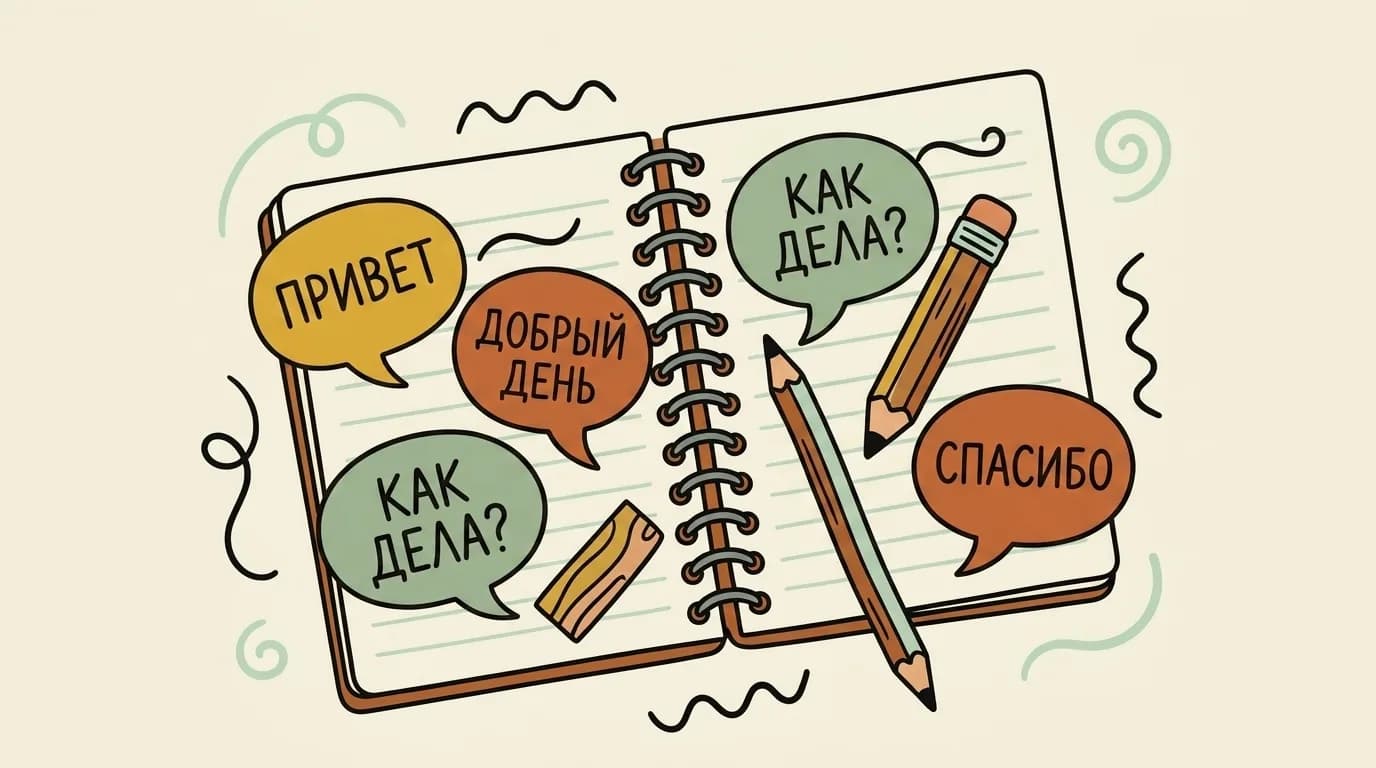
Спасибо. Большое спасибо. Пожалуйста. Не за что.
Thank you. Thank you very much. You’re welcome. Don’t mention it.
Stress: спаси́бо, большо́е спаси́бо, пожа́луйста, не́ за что. Pause after each phrase and repeat.
AI-generated practice audio; not a recording of Alex.
Choose one phrase for your next conversation. Спасибо is enough for an ordinary favour; большое спасибо adds emphasis. The pronunciation cues below are approximations, so listen to the Russian as well as reading the Latin spelling.
Один чай, пожалуйста. Вот ваш чай. Спасибо. Пожалуйста.
One tea, please. Here is your tea. Thank you. You’re welcome.
Пожалуйста first makes a request polite, then answers thanks. This is one synthetic voice reading both parts.
AI-generated practice audio; not a recording of Alex.
Choose the reply before opening the answer
| Situation | What would you say? |
|---|---|
| A server gives you your tea. | Thank them briefly. |
| A friend thanks you for a small favour. | Give a friendly reply. |
| You want to ask for water politely. | Add “please” to Воду, ... |
Suggested answers and why they fit
- Спасибо. A straightforward thank-you fits the situation.
- Пожалуйста or Не за что. Both can answer thanks; the second downplays the effort.
- Воду, пожалуйста. Here пожалуйста belongs to a request. Спасибо thanks someone; it does not replace “please” in this sentence.
Repeat the café exchange once with the transcript, then once looking only at the English. If the letters slow you down, keep the Cyrillic alphabet reference open alongside it.
How to Say Thank You in Russian: Spasibo
The default, all-purpose way to say thank you in Russian is Спасибо (spasibo, "thank you"). It works in a cafe, a taxi, a business meeting, or at your friend's kitchen table. There is no separate formal and informal version of the word itself, which makes your life easy.
A quick note on the spasibo meaning, because students love this. The word is a squished-together blessing: it comes from the old phrase "спаси Бог" (spasi Bog), meaning "may God save you." Nobody thinks about that today, the same way English speakers do not think "good" when they say "goodbye." But it is a sweet origin story to keep in your back pocket.
Pronunciation is where people stumble, so let me slow it down. Say it as spuh-SEE-buh. The stress lands hard on the middle syllable, SEE. The first and last vowels relax into a soft "uh" sound because they are unstressed, which is a core feature of Russian. Do not say "spa-SEE-bow." Russians will understand you, but that final "buh" is what makes you sound natural.
Tip: Whisper the unstressed vowels and lean on the stressed one. Russian rhythm is all about one strong beat per word. Nail the stress and your accent improves instantly.
Thank You Very Much and Other Intensifiers
Sometimes plain спасибо is not enough. Someone helped you carry your suitcase up four flights of stairs, and you need to say thank you very much. Reach for Большое спасибо (bolshoye spasibo, "big thank you"). Yes, it literally means "big thanks," and yes, Russians find it perfectly normal.
Want to go even further? Stack the adjective: Огромное спасибо (ogromnoye spasibo, "huge thank you") is heartfelt and common. For something truly generous, people add Спасибо большое за помощь (spasibo bolshoye za pomoshch, "thank you very much for the help"), where за (za, "for") introduces the thing you are grateful for.
There is also Благодарю (blagodaryu, "I thank you"), which is more formal and a little old-fashioned. It is lovely in writing, a thank-you card, or a polished speech. In everyday conversation, stick with спасибо so you do not sound like a character from a 19th-century novel.
You're Welcome in Russian: Pozhaluysta and Ne Za Chto
Now for the half of the conversation everyone forgets to practice: how to reply when someone thanks you. The most common you're welcome in Russian is Пожалуйста (pozhaluysta, "you're welcome / please"). Pronounce it puh-ZHAL-stuh, swallowing that middle "uy" the way natives do. Write all the letters, but speak it lean.
Here is the fun part, and a key answer to one of the most asked questions about please in Russian. The word пожалуйста pulls double duty: it means both "please" and "you're welcome." Same spelling, same sound, two jobs. So when you hand someone a coffee, you can say пожалуйста ("here you go / you're welcome"), and when you ask for that coffee, you also say пожалуйста ("please"). Context tells everyone which one you mean.
The other big reply is Не за что (ne za chto, "don't mention it"), literally "for nothing." It is warm, casual, and slightly modest, the verbal shrug that means "it was no trouble." Among friends you will also hear Да не за что (da ne za chto, "oh, it's nothing") and the very relaxed Не стоит (ne stoit, "don't worry about it").
A Quick Reference Table
Here is everything in one place. Keep this open while you practice.
| Russian | Transliteration | Meaning | When to use |
|---|---|---|---|
Спасибо | spasibo | Thank you | Always works, any situation |
Большое спасибо | bolshoye spasibo | Thank you very much | When you really mean it |
Огромное спасибо | ogromnoye spasibo | Huge thanks | Big favors |
Благодарю | blagodaryu | I thank you | Formal, written, polished |
Спасибо за помощь | spasibo za pomoshch | Thanks for the help | Naming what you thank them for |
Пожалуйста | pozhaluysta | You're welcome / please | Replying, or asking politely |
Не за что | ne za chto | Don't mention it | Casual, modest reply |
Спс | sps | Thx | Texting only |
Texting, Slang, and Regional Flavor
Russians text constantly, and just like English has "thx," Russian has Спс (sps, "thx"). It is the casual shorthand you fire off to a friend who sent you a meme. Never use it in an email to your boss or your tutor, but with buddies it is everywhere. You may also see пжл (pzhl) as a clipped version of пожалуйста in messages.
For a slightly playful, very friendly thank you, some people say Спасибки (spasibki, "thankies"), a cute diminutive. It is light and affectionate, best with people you know well. Across Russian-speaking regions the core words stay the same, which is a relief: спасибо will carry you from Moscow to Vladivostok without a single change.
A Few Cultural Notes on Russian Politeness
This part matters as much as the vocabulary. Russians can come across as blunt to American ears, partly because they reserve big smiles and effusive thanks for genuine warmth rather than service transactions. A simple, sincere спасибо is plenty at a shop counter. You do not need the layered "thank you so much, have a wonderful day" that feels natural in the States.
But within friendships and family, gratitude is deeply felt. A guest who praises the food and thanks the host warmly is doing exactly the right thing. And a small cultural rule worth knowing: many Russians believe you should not thank someone too profusely before a favor is done, only after, so the good outcome is not jinxed. Charming, a little superstitious, and very Russian.
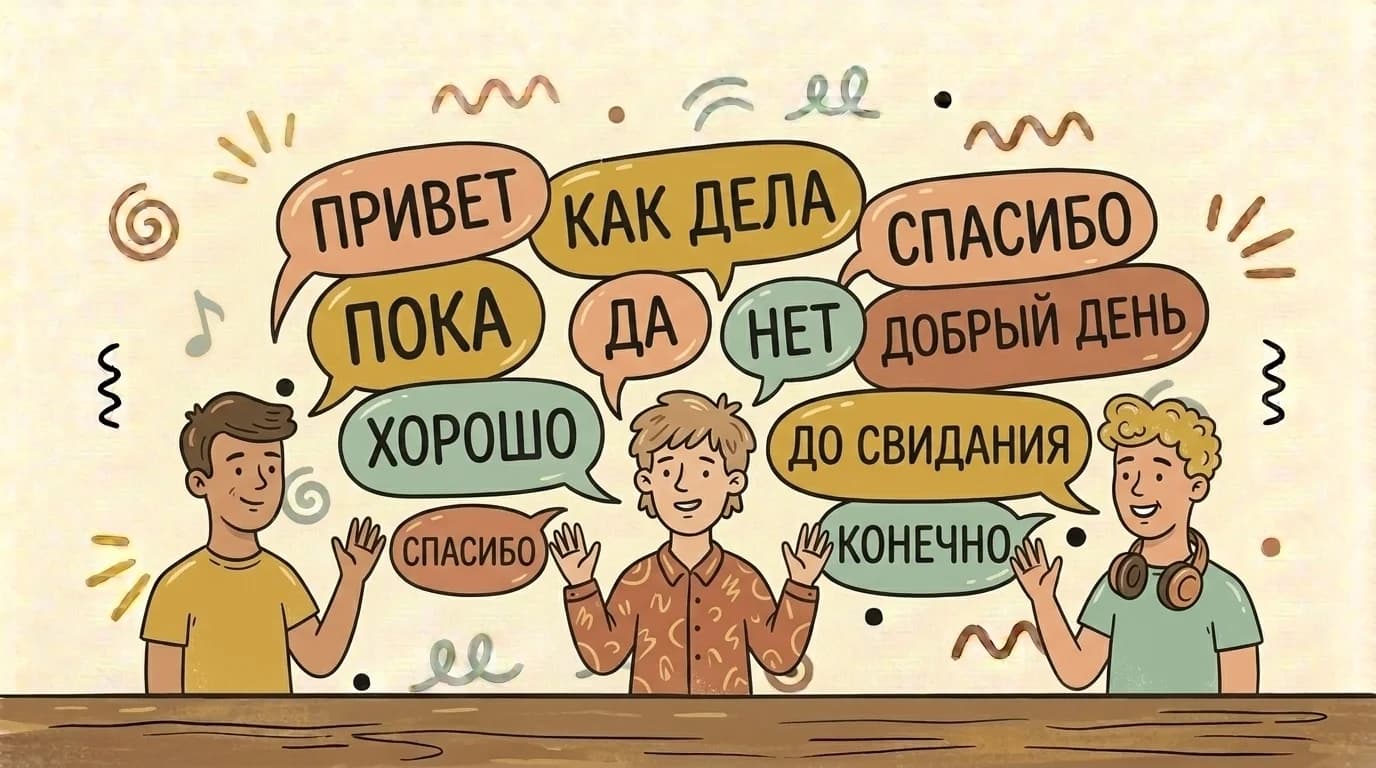
If you want the building blocks that make these thanks land in real conversations, start with my guide to essential Russian phrases and pair it with how to say hello in Russian. Greeting plus gratitude is a complete tiny interaction, and that is where confidence is born.
Practicing this out loud with a real person beats any app, because someone has to hear your stress and your swallowed vowels and gently fix them. If you would like that, I teach friendly, no-pressure 1-on-1 online Russian lessons where we build exactly these everyday phrases until they feel automatic.
Try this today
- Say
Спасибо(spasibo) out loud ten times, slamming the stress on the middle syllable: spuh-SEE-buh. - Practice
Большое спасибо(bolshoye spasibo) for "thank you very much," then addза помощь(za pomoshch) to thank someone for help. - Reply to an imaginary thank-you with both
Пожалуйста(pozhaluysta) andНе за что(ne za chto). - Use
пожалуйстаin its other role, as "please," when you ask for something, and notice how the same word does two jobs. - Text a Russian-speaking friend a quick
Спс(sps) and watch them grin at how natural you sound.
Quick answers about saying thank you in Russian
Is thank you in Russian spasiba or spasibo?
The standard transliteration is spasibo, from Спасибо. In natural speech, the final unstressed о sounds closer to “uh,” which is why English speakers sometimes write or hear “spasiba.” Write spasibo and pronounce it spuh-SEE-buh.
What does spasibo mean?
Спасибо (spasibo) means “thank you.” It is the normal all-purpose expression of gratitude in Russian and works in formal and informal settings.
How do Russians say thank you very much?
Say Большое спасибо (bolshoye spasibo), literally “a big thank you.” Огромное спасибо (ogromnoye spasibo, “huge thanks”) expresses even stronger gratitude.
How do you respond to spasibo in Russian?
The standard reply is Пожалуйста (pozhaluysta, “you’re welcome”). Не за что (ne za chto, “don’t mention it”) is a common, friendly alternative when the favor was no trouble.
Does pozhaluysta mean please or you're welcome?
It means both. Пожалуйста is “please” when making a request and “you’re welcome” when replying to thanks; the situation makes the meaning clear.