Essential Russian phrases for real conversations
Start with phrases you can use as complete messages: hello, thank you, I do not understand, please repeat, and simple questions. Learn the sound and situation together, then reuse each phrase in short exchanges instead of memorizing an isolated list.
A useful Russian phrase is more than a translation. You need to know who you can say it to, which word carries the stress, and what a natural answer sounds like. That is why this path groups phrases by conversation rather than alphabetically.
Begin with ten survival phrases, add greetings and polite responses, then move into small talk. You will understand less Russian at first than you want to speak. Phrases such as ‘Please repeat’ and ‘What does that mean?’ keep the conversation going while your vocabulary catches up.
A practical order
Three steps that build on each other
- 1
Learn complete mini-exchanges
Pair every new phrase with a likely reply. Learn Привет! Как дела? together with Хорошо, спасибо. This gives your brain a situation, a rhythm, and a reason to retrieve the words.
- 2
Mark the stressed syllable
Russian word stress is mobile and often unpredictable. Copy the stressed vowel into your notes and say the whole phrase aloud, slowly first and then at conversational speed.
- 3
Use five phrases for one week
Five phrases used repeatedly beat fifty phrases seen once. Put them in messages, narrate a pretend café order, or use them in a lesson until they arrive without translation.
Read next
Guides from first step to real use
Conversation
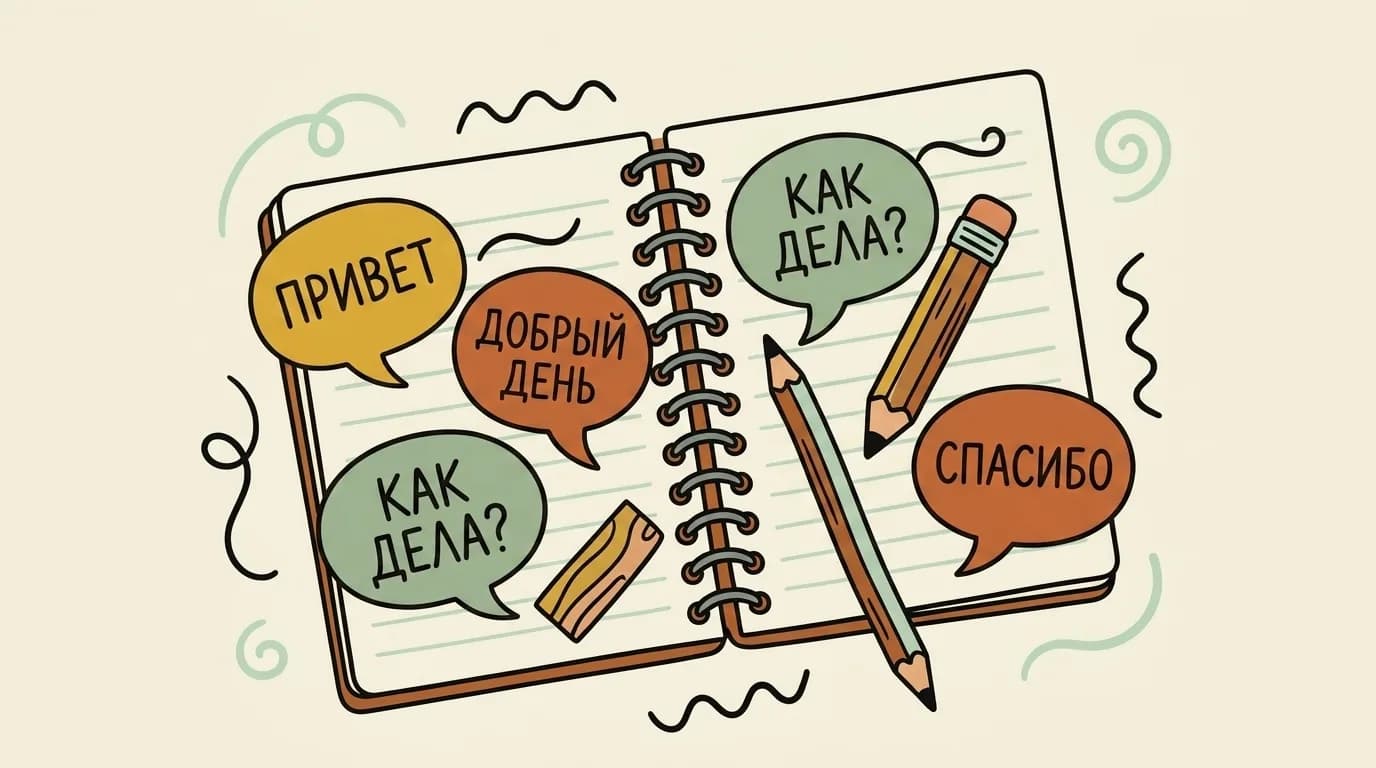
Essential Russian Phrases for Beginners: 40+ You'll Actually Use
The common Russian phrases a beginner actually needs first: greetings, politeness, survival lines, with transliteration and meaning so you can start speaking today.
Conversation
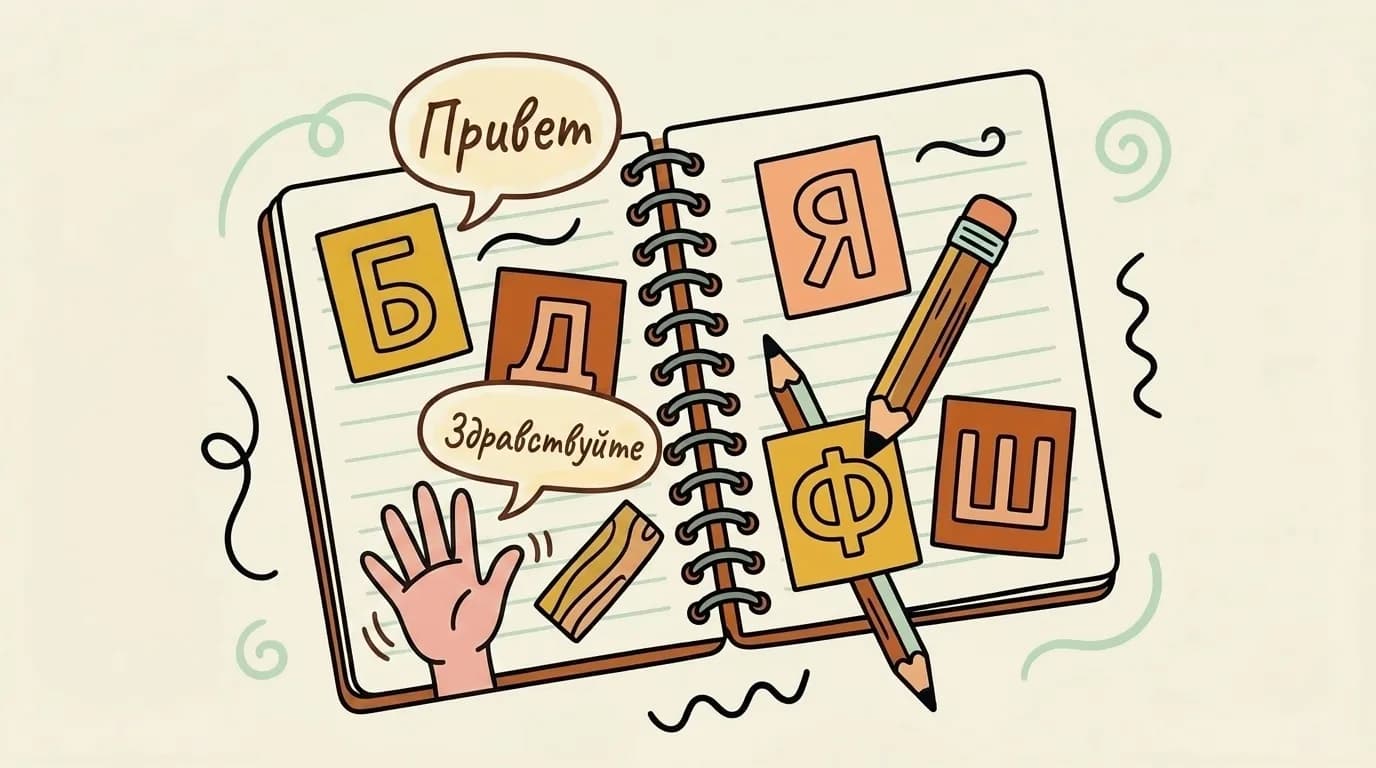
How to Say Hello in Russian: Every Greeting You Need
How to say hello in Russian the right way: formal zdravstvuyte, casual privet, good morning and evening greetings, with pronunciation help and when to use each.
Conversation
How to Say Thank You in Russian (and Reply Like a Native)
How to say thank you in Russian: spasibo, bolshoe spasibo, and how to say you're welcome, with pronunciation and the cultural nuance of Russian politeness.

Conversation
How to Say I Love You in Russian (and Mean It Right)
How to say I love you in Russian: ya tebya lyublyu, the crucial difference from I like you, plus terms of endearment and pronunciation, explained by a native speaker.
Conversation
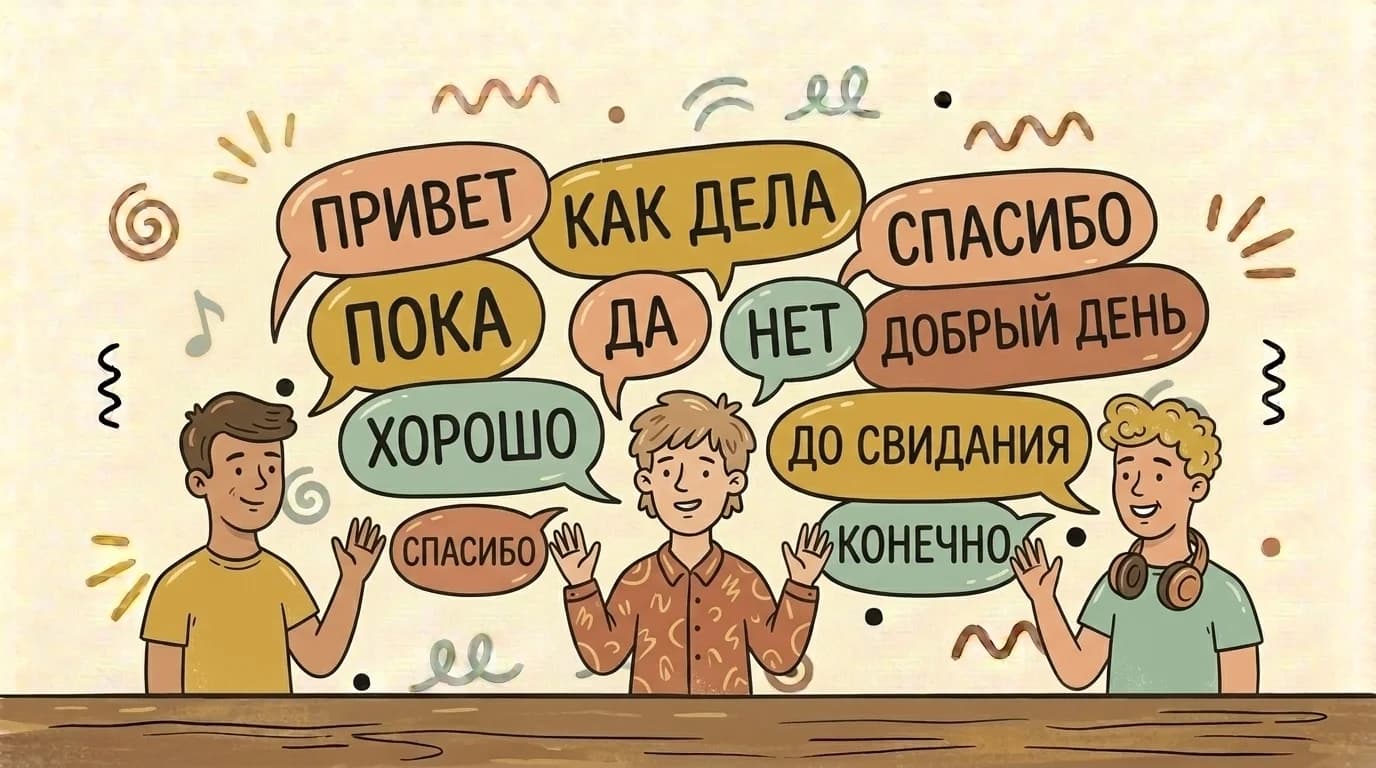
Russian Small Talk: 10 Phrases for Real Conversations
Start Russian small talk with 10 practical phrases for introductions, everyday questions, natural replies, and graceful goodbyes.
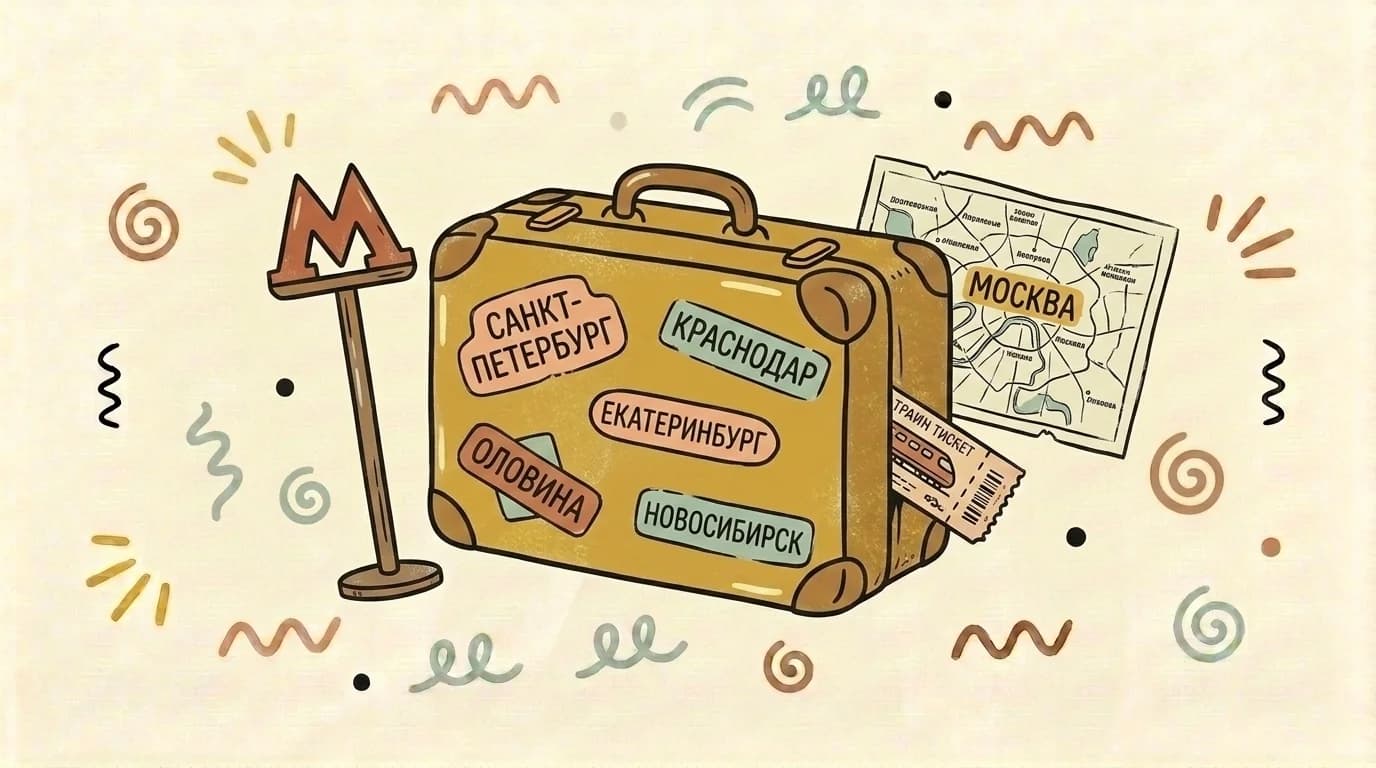
Conversation
Russian for Travel: Directions, Transport, Accommodation
Russian for Travel: Directions, Transport, Accommodation
Quick answers
Common questions
What Russian phrases should a beginner learn first?
Start with greetings, yes and no, please and thank you, ‘I do not understand,’ ‘Please repeat,’ ‘Do you speak English?’ and one or two phrases connected to your reason for learning.
Should I learn Russian phrases in Cyrillic or transliteration?
Use transliteration as a temporary pronunciation aid, but keep Cyrillic beside it from day one. Cyrillic is more reliable once you know the alphabet and prevents permanent spelling mistakes.
How many Russian phrases can I learn in a day?
Five phrases a day is a practical ceiling if you also say them, recall them without looking, and reuse them in context. Recognition alone is not the same as being able to speak.
How do I remember Russian phrases?
Attach each phrase to a situation, a reply, and a spoken repetition. Review after one day, three days, and one week, then use it in a real exchange.
Turn the next step into a conversation
Bring the words or rule that keeps tripping you up. Alex will turn it into a practical 30-minute trial with feedback you can use immediately.
Free trial, no card and no commitment.