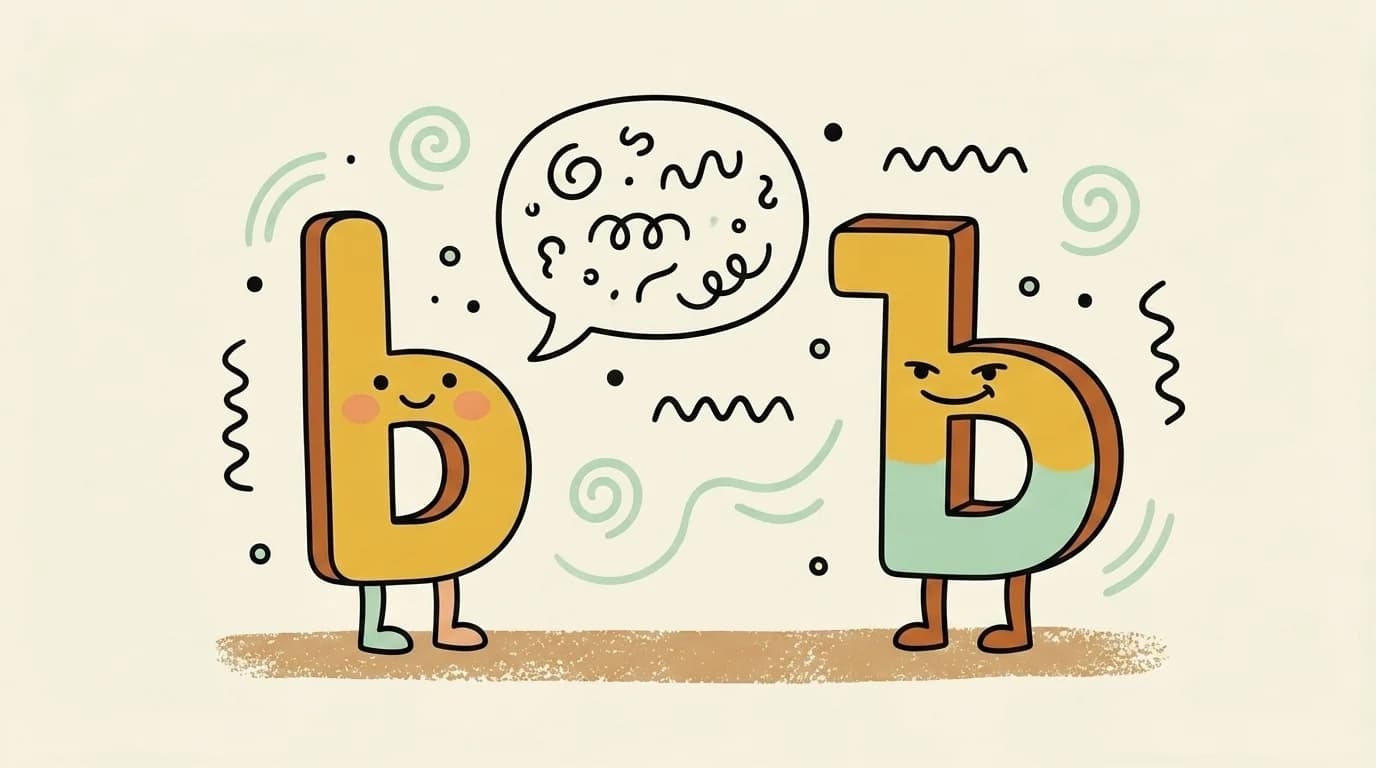
The Russian soft sign ь and hard sign ъ have no sound of their own. They give spelling and pronunciation information. A soft sign can mark a soft consonant, separate sounds, or mark a grammatical form. A hard sign separates a consonant from a following е, ё, ю or я. Neither sign tells you to insert a pause.
Three jobs of the soft sign
| Job | Example | What to notice |
|---|---|---|
| Mark a soft consonant | угол / уголь | “Corner” / “coal”: the final л changes. |
| Separate before a vowel | семья | “Family”: hear a consonant followed by a y-like sound and the vowel. |
| Mark grammar | ночь | “Night”: ч is already soft; ь does not soften it again. |
To make a paired consonant soft, raise the middle of your tongue while making the consonant. Do not add a separate “yuh” syllable at the end. Compare брат (“brother”) with брать (“to take”). Both have one syllable.
The grammatical use matters when spelling. Ночь and дочь (“daughter”) have a soft sign; мяч (“ball”) does not. Their final ч is soft in each case. You cannot decide every spelling by listening for softness alone.
What the hard sign separates
In сел (“he sat down”), е follows the consonant directly. In съел (“he ate”), ъ signals the separated y-like beginning of the following vowel. Say the whole word smoothly. Do not stop in the middle or read the name of the sign aloud.
A common spelling pattern is a consonant-ending prefix before е, ё, ю or я: подъезд (“entrance”), объявление (“announcement”), объяснить (“to explain”). Learn the complete words rather than inserting ъ whenever you hear a consonant followed by y. The soft sign also separates, as in пьеса (“play”) and друзья (“friends”).
The name “hard sign” is not a complete rule for all neighbouring sounds: assimilation can affect pronunciation. For a beginner, the useful distinction is direct connection versus separation, with no added pause.
Listen and compare real words
Угол. Уголь. Брат. Брать. Семя. Семья. Сел. Съел.
Corner. Coal. Brother. To take. Seed. Family. He sat down. He ate.
Stress: у́гол, у́голь, бра́т, бра́ть, се́мя, семья́, се́л, съе́л. Семя and семья also differ in stress. Neither sign is a separate vowel or an instruction to pause.
AI-generated practice audio; not a recording of Alex.
Read each pair, listen, then repeat with the recording paused. Семя (“seed”) and семья (“family”) differ in stress as well as separation; they are not a test of the sign alone.
Check your understanding
1. Choose the word for coal: угол or уголь?
Уголь. Keep the final л soft without adding a vowel. Угол means “corner”. Both stress the first syllable: у́голь, у́гол.
2. Does ночь contain an extra soft sound because of ь?
No. Ч is already soft. Here the sign marks the written grammatical form. Compare мяч: no ь, but still a soft ч.
3. Should you pause in съел or друзья?
No. Both words contain separation before a y-like sound, but the speech stays connected. Съел has one syllable; друзья́ has two.
4. Fill the gaps: сем_я (family), об_явление (announcement), брат_ (to take).
Семья́, объявле́ние, брать. The first ь separates, the ъ separates at the prefix boundary, and the last ь marks a soft т in the infinitive.
A two-minute practice routine
- Write
угол / уголь,брат / брать,сел / съелon paper. - Record each pair once. Keep the same number of syllables within each pair.
- Compare with the audio and repeat only the difficult pair.
- Read
семья́andдрузья́in full words, keeping their stress and connected pronunciation.
If you cannot hear the contrast yet, bring your recording to a Russian lesson for individual feedback. Audio repetition helps you practise; it does not diagnose your pronunciation.
Spelling references
Reviewed against Gramota's rules on the soft sign and its functions and separating ь and ъ. For more reading practice, continue with the Russian syllable drills.